

The Dam Dilemma: How to build dams to best protect community, environment
April 15, 2026 - Jack Harrison and Diane Huhn
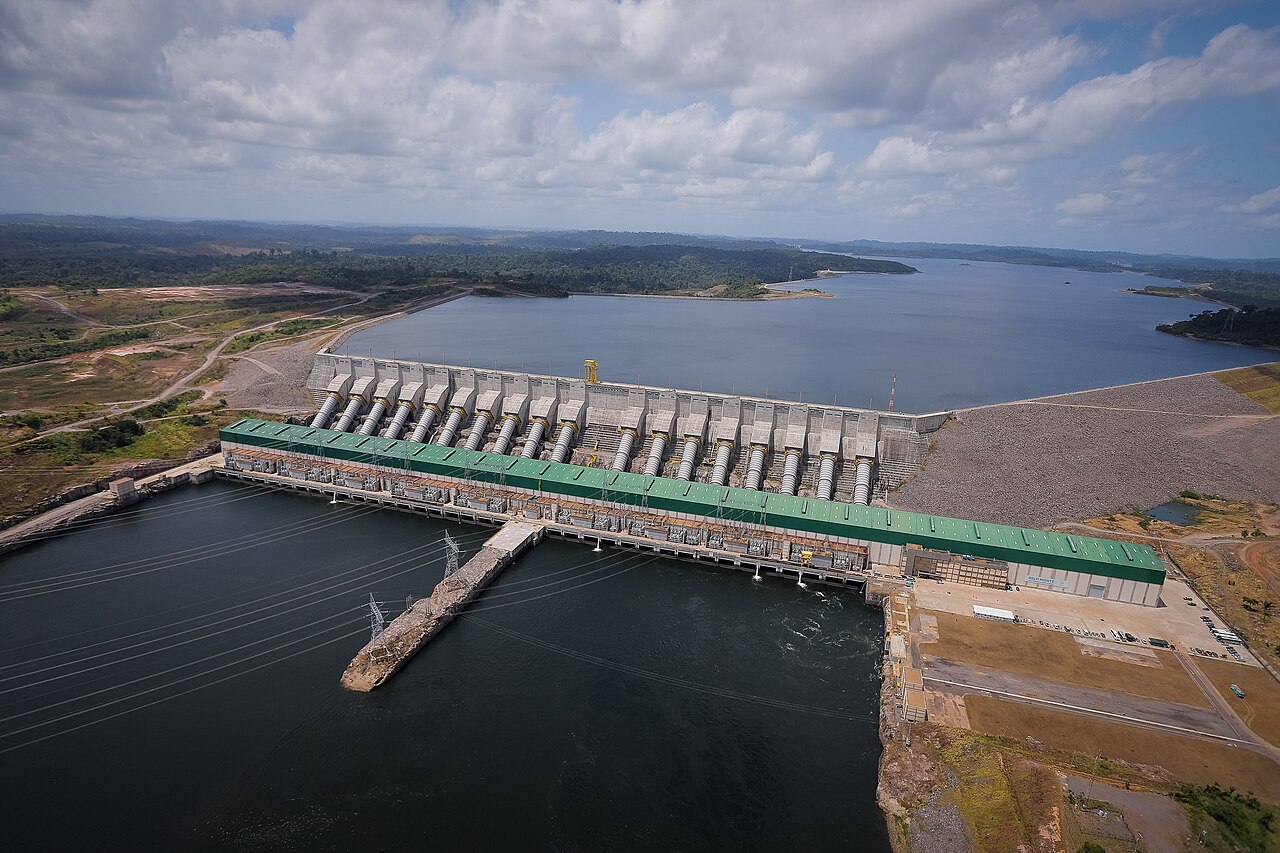
As the U.S. and other countries expand clean energy, large hydropower dams, often seen as a reliable renewable solution, can come with significant environmental and social costs if not planned thoughtfully.
New research from Michigan State University finds that without better planning and community involvement, dam projects risk repeating decades-old mistakes — raising important questions about dam construction and hydroelectricity projects.
Today, hydropower generates more than half of the world’s renewable electricity, and the research team’s findings, published in the journal Nature Sustainability, are starting to form the basis for global conversations on how to address the challenges surrounding dam projects.
“Hydropower has been sold as a solution to a country’s energy needs but our studies show that, in most cases, countries building large-scale hydropower forget to ensure that damages are minimized in local communities,” said Emilio Moran, an MSU John A. Hannah Distinguished Professor in the Department of Geography, Environment and Spatial Sciences. “Large dams bring about irreversible damages to river ecosystems, fisheries and fishermen’s livelihoods.”
Background and history
In the early 2000s, the World Commission on Dams outlined strategies to reduce environmental and social impacts, but the report was dismissed by the major dam-building nations such as China, India and Brazil, who claimed that the recommendations would be impractical and slow economic development goals.
A quarter century later, as problems persist, the research team sought to understand what characterizes the current wave of large hydropower dam building in the global south.
That said, a growing number of local communities are organizing internationally to protect their environments and livelihoods, with questions around policy and sustainability becoming more important for future projects.
Findings and implications
To help steer hydropower projects toward a more sustainable path, instead of building dams project by project, the study suggests looking at entire river systems and incorporating local communities, government entities and energy providers at the start of decision-making.
This approach would help identify overlooked opportunities, including:
- Reduce environmental impacts
- Better adapting to the effects of climate change
- Incorporate other aspects of hydropower to include solar, wind, hydrokinetic turbines, and floating solar panels in the energy mix of dam building.
While these technologies are already proven to increase renewable energy production and improve resilience, the researchers call for more use and funding.
The study suggests there has been a growing call to move away from top-down decision-making to a more collaborative, cross-sector approach known as horizontal governance, where multiple groups share responsibility, including an increasingly popular “prosumer” model, where users both consume and produce energy.
“Such a model would empower local and Indigenous communities to become both producers and consumers of their own energy,” said Sergio Villamayor-Tomas, researcher at the Autonomous University of Barcelona and co-author of the study. “This approach can help to democratize the power system and ensure that those most affected by energy projects are also able to benefit from them, which generally has not been the case to date.”
While some countries look to hydropower as way to reduce fossil fuel emissions, the study demonstrates that renewable energy does not automatically equal sustainability; rather, it is a unique opportunity to encourage local energy decision-making and reduce dependence on fossil fuels.
“However, with more strategic planning, horizontal governance and community-led solutions, our work demonstrates that the tools for a better path forward already exist,” said co-author Maria Claudia Lopez, associate professor at MSU’s College of Agriculture and Natural Resources. “The question is not whether governments and investors will meet their energy needs, but [will they] do so without sacrificing the world’s vital ecosystems. The tools and frameworks are in place, and this article is one important contribution highlighting them and advancing ongoing discussions of the energy transition.”
The research team included:
- Emilio Moran, MSU John A. Hannah Distinguished Professor, Department of Geography, Environment and Spatial Sciences, College of Social Science
- Maria Claudia Lopez, professor, Department of Community Sustainability, College of Agriculture and Natural Resources
- Daniel Kramer, professor, James Madison College and professor, Department of Fisheries and Wildlife, College of Agriculture and Natural Resources
- Sergio Villamayor-Tomas, Department of Political Science and Public Law and the Institute of Environmental Science and Technology, Autonomous University of Barcelona
- Researchers at organizations in the U.K., Cambodia, Italy and the U.S. based on a series of workshops sponsored by the National Socio-Environmental Synthesis Center, which is funded by the National Science Foundation.