

MSU researchers receive grant to expand renewable energy work in Brazilian Amazon
October 29, 2026 - Diane Huhn
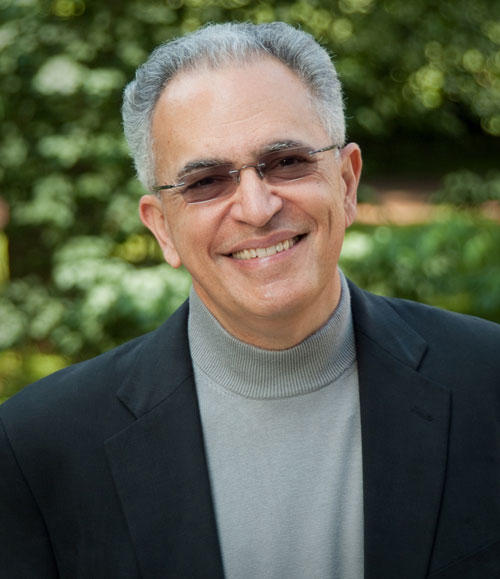 Michigan State University John A. Hannah Distinguished Professor Emilio Moran has been awarded a $300,000 grant from the Charles Stewart Mott Foundation to renew and expand the project “Renewable Community-Led Infrastructure in the Tapajós Basin.” The additional funding will allow Moran’s team, including Co-Principal Investigator Maria Claudia Lopez, Professor in the MSU Department of Community Sustainability, to continue this vital work for another two years beginning in January 2027.
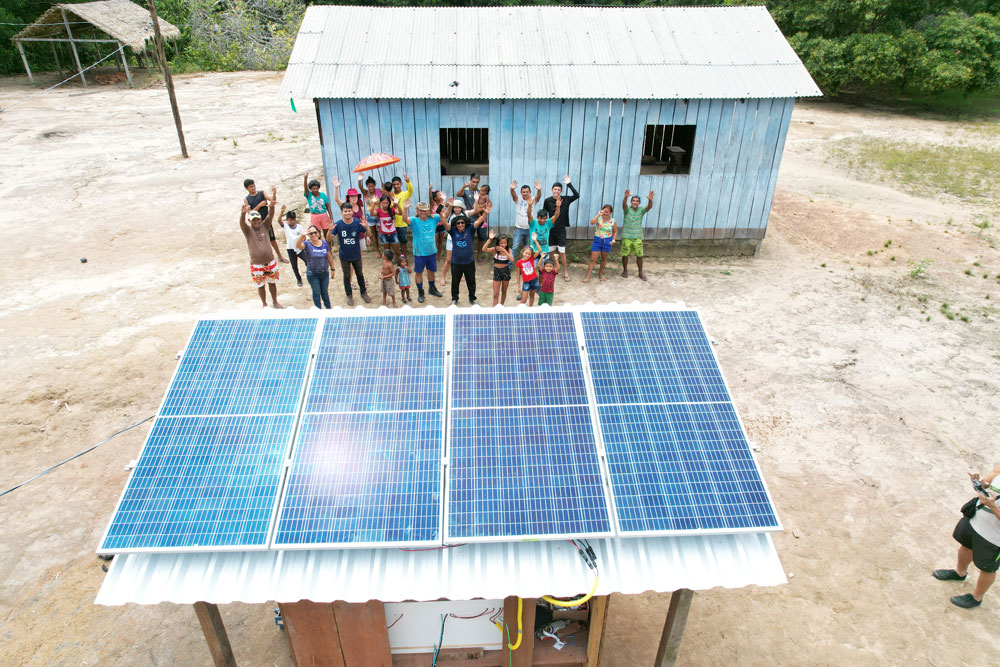
Building on momentum from earlier C.S. Mott Foundation awards and National Science Foundation (NSF)-funded convergence research, the initiative addresses energy poverty in off-grid communities in the Brazilian Amazon, where an estimated one million people lack access to the national electrical grid, often powered by large-scale hydropower dams. Without reliable power, these communities face steep barriers to education, nutrition, healthcare, and economic opportunity.
For the past four years, the MSU team and its partners have installed in-stream turbines and solar energy across off-grid communities in the Tapajós Basin. “This renewal will enable us to focus on strengthening the installations in 14 communities in the Santarem region of the Brazilian Amazon, working to boost their capacity to make greater economic use with the additional energy we will install and thereby strengthen their well-being,” said Moran, who holds appointments in the Department of Geography, Environment, and Spatial Sciences, the Center for Global Change and Earth Observations, and the Center for Latin American and Caribbean Studies. “We will also strengthen the Renewable Energy Laboratory at the Federal University of Para, our local university partners in this work, increasing their capacity to train students and community members in solar technology and in sustaining the installed water and energy infrastructure. We will continue to work with networks like Energia e Comunidades that have successfully mediated the needs of communities in the Santarem region to ensure that advances in energy availability respond to the real needs of communities.”
“A cornerstone of the project is ensuring that energy solutions remain locally managed and sustainable over the long term,” said Lopez. “To achieve this, the initiative emphasizes strong institutional partnerships and grassroots governance.”
Serving as a model for scalable, clean energy delivery in off-grid regions globally, the project’s participatory community engagement framework earned the team an MSU Distinguished Partnership in International Community Engagement Award in 2024.