

Beyond the boom: MSU research reframes the future of smallholder farming
October 1, 2026 - Diane Huhn
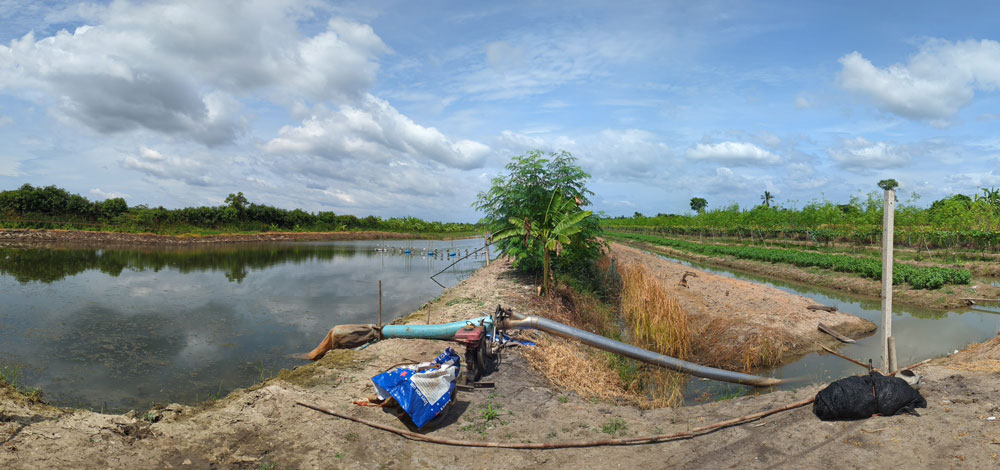
What happens when a crop boom slows down? While global development research often focuses on the explosive phase of agricultural markets, a new study led by researchers at Michigan State University shifts the lens to the critical, but less understood, aftermath of the boom.
The article, titled “What happens after the boom? Aquaculture, land use change, and smallholder resilience in Central Thailand,” was published in the Journal of Rural Studies by lead author and MSU dual-major Ph.D. student in Geography and Environmental Science and Policy Leo Baldiga, alongside MSU co-authors Ben Belton, Lin Yan, Meicheng Shen, and David P. Roy, with international partners Sansanee Wongvoralak, an independent researcher, and Orachos Napasintuwong of Kasetsart University.
Unpacking the Post-Boom Landscape
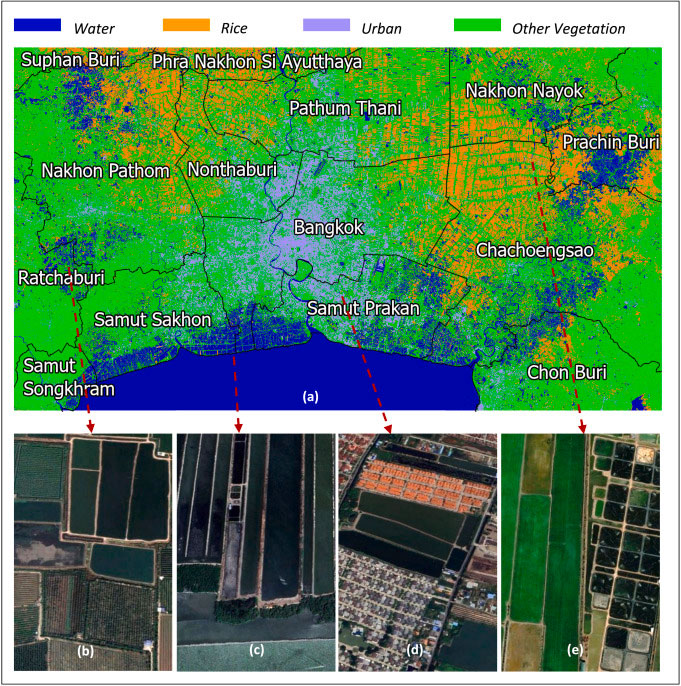
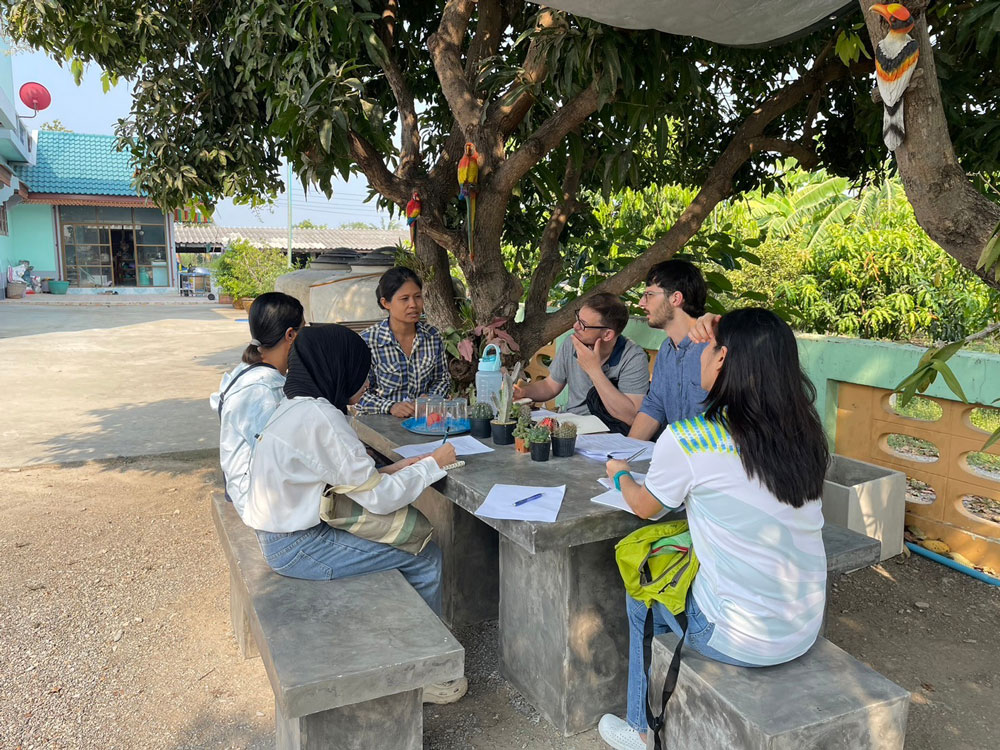
Focusing on Central Thailand’s intensive aquaculture sector in the period after the 1990s and 2000s, when large areas of land were rapidly converted to mono-cropped production of shrimp, tilapia, and other aquatic animals, the study examines how farming communities adapt when rapid economic expansion stabilizes. Using spatial analysis of land-use transitions, household surveys, and in-depth interviews, the team mapped the complex social and ecological legacies left behind by decades of intensive shrimp and fish farming.
Rather than a rapid “bust” after peak production as has been frequently reported in other boom crop contexts, the team found that the post-boom landscape in Central Thailand triggered a range of adaptive responses among local farmers. As the volatility of initial high-yield gains and equally as devastating losses leveled off, smallholder farmers who had joined in on the aquaculture boom navigated multi-faceted stresses including volatile market prices, rising costs, disease outbreaks, and degraded soil and water conditions. “We found that the long-term changes made to the land during the boom, such as conversion of agricultural land, pond building, and salinization, often limited the land-use options for farmers after the boom, and they had to find innovative ways to adapt in order to move forward in a viable way,” said Baldiga.
Resilience through Innovation
To maintain their farm’s financial viability, smallholder farmers employed a range of resilience strategies. Some switched to raising easier, lower-risk species or mixed farming with other crops. As shrimp consumption in Thailand has increased dramatically over past decade, some farmers have diversified their marketing strategies, producing more shrimp for the domestic market. Others have reshaped part of their land or took on jobs outside of farming to protect themselves against unexpected price drops and market swings.
By looking at these different paths, the study shows that when the extreme profits and losses associated with the peak of a crop boom ends, it doesn’t always result in catastrophe for farmers. Instead, given the right preconditions, it can kick off a period of reshaping and restructuring in an effort to ensure long-term sustainability and success. “In comparison to the past, aquaculture today has become less of a casino, and more of a steady, adaptable part of household livelihoods in central Thailand,” said Baldiga.
Ultimately, the study offers key insights for policymakers and development organizations, emphasizing that long-term rural sustainability depends on supporting diverse, flexible livelihood strategies well after an agricultural market reaches maturity.