

Ask the expert: COVID-19 from a geographer’s lens
March 30, 2026

This past March marked six years since the World Health Organization declared COVID-19 a global pandemic. Many researchers have studied and examined COVID-19, especially through a public health understanding. But what can geography add to our understanding of pandemics?
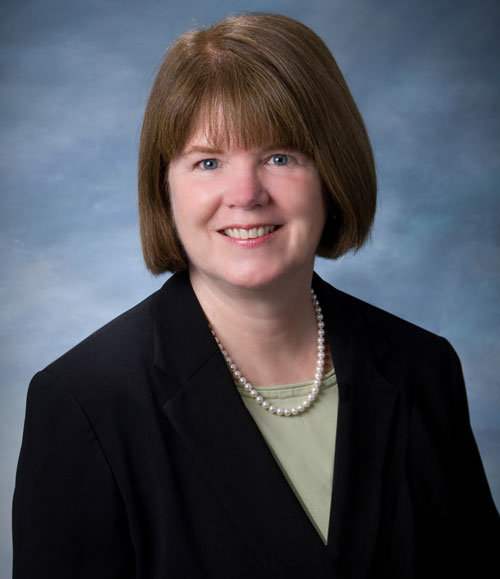 Sue Grady is a professor in the Department of Geography, Environment and Spatial Sciences in the Michigan State University College of Social Science, and she has spent her career studying how place influences health outcomes. As the world reflects on the six years since COVID-19 was declared a pandemic, Grady shares insights on how geographers study disease spread and what lessons the pandemic revealed to prepare for future health concerns.
How did your path from nursing to geography shape your understanding of pandemics?
I started out as a nurse working in a cardiovascular surgical intensive care unit for about 10 years. During that time, I also volunteered with the Children’s Heart Fund in Tegucigalpa, Honduras, helping train nurses in the care of children with rheumatic heart disease. That experience really opened my eyes to the health care needs of lower-income countries as I moved between a hospital in Minneapolis that had every resource imaginable and a hospital in Honduras that had very few resources. It made me start asking bigger questions about why those differences exist.
That led me to study public health and, eventually, medical geography. What drew me in was the idea that geography helps us understand why disease occurs in certain places and not others. Medical geographers study the spatial patterns of disease, using maps to understand where disease appears and then we try to understand what might be happening in those places that contributes to disease, such as environmental factors, social conditions or poor access to health care. That spatial perspective is important, in particular when we are trying to understand how diseases spread from one place to another.
What do you remember most clearly about the early days of COVID-19?
I remember it very clearly. I was teaching a geography seminar course when one of my students, Ana, asked if I had heard about the coronavirus outbreak. I hadn’t, so we ended up spending that morning talking about its potential and what it might mean. That talk was toward the end of the fall semester before the United States began its surveillance of COVID-19 in January 2020 and the World Health Organization declared COVID-19 a pandemic in March 2020.
Why did you decide to focus your research on nursing homes during the pandemic?
Early in the pandemic, it became clear very quickly that the people most impacted were the elderly and those with other illnesses. A few of us faculty members thus applied and received a grant from the College of Social Science to study COVID-19 in nursing homes. I had never researched nursing homes before, but it felt like an important place to start.
Mapping the spatial patterns of COVID-19 in nursing homes over the first 10 weeks of the pandemic had a significant impact on me because it showed just how quickly the virus had spread.
What did mapping the data reveal about COVID-19’s spread?
What was striking in this study was that from the time of the first nursing home death in February 2020 and the first week of nursing home surveillance in May 2020, the virus had already spread widely across the country, with major epicenters in the Northeast and some in the Midwest followed by the South around the sixth week. Seeing those patterns mapped out showed just how quickly the virus had diffused.
From there, we could start asking deeper questions about why those patterns appeared. For example, we began looking at how practices in early epicenters may have influenced other regions, such as the South, as the virus spread. Geography allows us to see not just how diseases spread, but how policies, communication and health practices move across space as well.
Where do you think communication fell short?
Looking back, I think communication was one of the biggest challenges. When we saw the early data on COVID-19 in nursing homes, we could see clear epicenters in the Northeast and Midwest and areas that had not yet been hit as hard. In theory, that should have allowed lessons from those early regions to be communicated quickly to other parts of the country.
For example, we saw practices like transferring patients from hospitals into nursing homes to continue as the virus spread south. That was difficult to understand because older adults were the most susceptible population. If some of those lessons from the early epicenters had been communicated more quickly, certain practices may have been reconsidered before the virus spread to other regions.
Public communication could have been clearer, too. For example, many people didn’t understand why they were being asked to stand six feet apart. Something as simple as showing how far a sneeze can travel might have made that guidance easier to understand. Looking back, I think there were opportunities to improve how we communicated both between regions and with the public.
What lessons can we continue to learn from the pandemic?
We still have a lot to learn from the pandemic. One thing that changed for me is that I now spend more time teaching about immunity in my infectious disease courses. COVID raised important questions about how immunity works, including the role of vaccination and natural immunity, and those are conversations that we are continuing.
More broadly, I think it’s important that we remain open to discussing all aspects of what happened during the pandemic. When something that large happens, there are many perspectives and many questions that need to be explored. This was an extraordinary event. When you look at global history, COVID is one of the largest pandemics the world has experienced. I think it’s important for all of us to recognize that and continue studying it carefully. The more openly we talk about what happened, the better prepared we’ll be for the next pandemic.
This ask the expert was repurposed from a podcast episode produced by the MSU Department of Geography. A complete listing of episodes is available online.
MEDIA CONTACTS