

Dr. Guo Chen
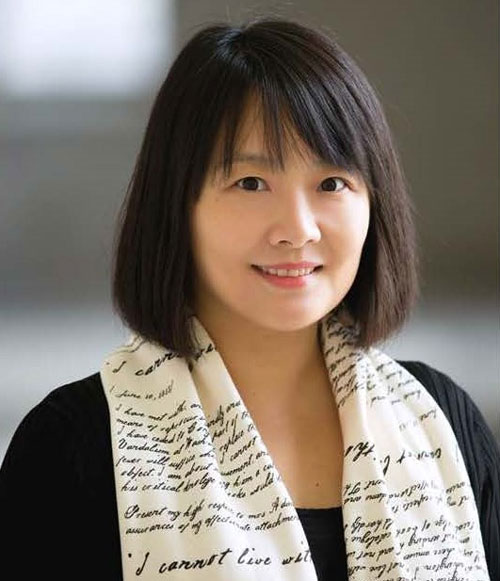
- Associate Professor
- Geography, Environment, and Spatial Sciences
- Geography Building
- 673 Auditorium Road, Room 211
- East Lansing, MI 48824
- 517-432-4747
- guochen@msu.edu
Links
Guo Chen Personal Website: https://people.geo.msu.edu/guochen
Guo [pronunciation link]
Areas of study
Urban and Economic Geography; Human Geography/Nature and Society; Poverty, Inequality, and Social and Environmental Justice; Slums, Housing, and Migrants; Urbanization and the Environment; Land Use, City-Regions, and Urban and Regional Governance; Waste Geographies; Urban Resilience; Mixed, Quantitative, Qualitative, and Creative Research Methods; China and Globalization; Global South, Asia-Pacific, and Emerging Countries; Inclusion, Justice, and the Future of Geography; Asian and Asian American Geographies
Biography
Guo Chen, Ph.D. (she/her), is an Associate Professor of Geography in the College of Social Science. She is also affiliated with the Environmental Science and Policy Program (ESPP), the Asian Studies Center, the Asian Pacific American Studies Program (as a core faculty member), and the Gender in a Global Context Center (GenCen). Dr. Chen earned her Ph.D. in Geography from Pennsylvania State University and holds both an M.S. and a B.S. degree in Geography and Regional Planning from Nanjing University. She has received numerous prestigious awards for her research, teaching, leadership, and service. Notable recognitions include a Wilson Center Fellowship (2017–2018), an Outstanding Service Award from the AAG specialty group (2020), and various university-wide honors. She received the College of Social Science Integrative Studies in Social Science Teaching Excellence Award (2010) and was named a Lilly Fellow for Faculty Leadership and Teaching Excellence/Innovation (2022–2023). In 2023, Dr. Chen received the MSU GenCen Inspiration Award for Professional Achievement. This prestigious award recognizes an individual each year whose unique and impactful passion, inclusive actions, and influence make an outstanding contribution to gender equity and social justice, positively influencing the culture at Michigan State University. In 2024, she was honored with the Outstanding Women of Color Award–Trailblazer Award from the Women of Color Community (WOCC). Dr. Chen is also the inaugural Co-Editor-in-Chief of Human Geography/Nature and Society for The Professional Geographer, a flagship journal of the American Association of Geographers (AAG). She has served in various leadership roles, contributing to the advancement of her field and academic community. Over the past several years, she has served consecutively as a college-elected Faculty Senator representing the College of Social Science on the Faculty Senate and University Council (2023–2024), an all-faculty-elected At-Large Member of the Steering Committee (2024), and an elected Executive Board member of the APAS program (2025) at MSU.
Guo is a human geographer with broad interests in urban, economic, critical, and environmental issues. As the editor of two books and four special issues, she is also a dedicated teacher-scholar and public intellectual. Her extensive research has produced over 60 publications focusing on topics such as inequality, urban poverty, social and environmental justice, housing rights, housing for the poor, slums, migration, urbanization, urban resilience, land use, and urban and regional governance. Recently, she has published work on Asian American geographies. Her work includes peer-reviewed articles and edited issues appearing in notable journals such as PLoS ONE, Scientific Reports, The Professional Geographer, Environment and Planning A, Sustainability, Urban Geography, Urban Studies, Cities, Habitat International, Environmental Management, and many others. Guo is the co-editor of Locating Right to the City in the Global South (Routledge 2013) and the lead editor of How to Foster DEI and Justice in Geography: Theory, Praxis, and Shaping Our Future (E Elgar 2024), which is regarded as genre-setting. She has also initiated and edited two popular Focus Issues for The Professional Geographer: “Hidden Geographies: Migration, Intersectionality, and Social Justice in a Global Contemporaneous Space” (2023) and “Hidden Geographies II: Making a Just City, For Whom and Where?” (2025), while also leading a forthcoming Article Collection for the journal. Both issues feature research addressing (im)migration, race, gender, sexual orientation, ethnicity, class, (dis)ability, nationality, and citizenship, as well as their intersections with inequality and social and environmental justice in transnational and urban contexts. More than fifteen diverse scholars, working with some of the most marginalized communities worldwide, have contributed to these issues. Additionally, Guo co-edited the special issue “Interrogating Unequal Rights to the Chinese City” for Environment and Planning A in 2012, based on sessions she organized as an early-career scholar at the AAG meeting. She also served as the editor for a special issue titled “Global Social and Environmental Justice: Intersections and Dialogues” for Sustainability. Her scholarly contributions include book chapters and creative works. Guo’s research and collaborative projects have received funding from several prestigious organizations, including the National Geographic Society, the National Science Foundation (DDRI), the National Natural Science Foundation of China, the Mellon Foundation-funded Urban China Research Network, the Woodrow Wilson Center, and various awards from Michigan State University, such as the IRGP–New Faculty Grant, CASID, HARP, DFI, Honors College, and Asian Studies–Dr. Delia Koo Awards.
Dr. Chen has held multiple leadership positions within the American Association of Geographers (AAG) China Geography Specialty Group (CGSG; following the AAG Committee on Chinese Geography in 1973) from 2012 to 2015, serving as secretary, vice-chair, chair, and as the long-term faculty sponsor of the group’s website at MSU. In recognition of her key contributions, she received an Outstanding Service Award in 2020. In 2023, she was nominated as a candidate for election as a National Councilor of the AAG. Recently, she has participated in the AAG’s Justice, Equity, Diversity, and Inclusion (JEDI) subcommittee and its inaugural working group focused on Research Partnerships for Targeted Mentoring Networks. Dr. Chen has also served on the editorial boards of The Professional Geographer and the Journal of Urban Affairs, and has served as an ad hoc reviewer for nearly 50 academic journals and numerous programs. Her academic leadership includes 140 organized sessions, invited talks, and conference presentations. Her public scholarship includes interviews, op-eds, and webinars.
At Michigan State University, Dr. Chen has held numerous elected and appointed leadership roles. She represented the College of Social Science as a college-elected Faculty Senator in the Faculty Senate (2023–2024) and served as an all-university, faculty-elected At-Large Member on the Steering Committee (2024). Her roles also include serving on the Executive Board of the Asian Pacific American Studies Program (2025), acting as an Elected Faculty Representative on the Asian Studies Advisory Council (2019–21), serving as a President-Appointed faculty member (2021–24), and acting as the Elected Chair of the President’s Advisory Committee on Disability Issues (2021–22). Additionally, she was a Graduate Students-Elected Faculty Mentor for the Supporting Women in Geography group and a founding faculty member of the Diversity Committee (2020–21), where she also served as the Appointed Chair of the first standing DEI committee in her department (2021–22). Dr. Chen has played an active role in various committees related to the Asian Pacific American Studies program and the APIDA/A community, and served on the Urban Environment Committee of the Environmental Science and Policy Program (2017–18). She has also participated in numerous departmental committees for search processes, faculty and staff awards, graduate admissions and funding, and the Economic Geography major, among others.
Mentoring and teaching through engaged learning are central to her scholarship. As a teacher-scholar, she has developed a creative pedagogy that actively engages students through visuals, documentaries, and simulations in nearly a dozen undergraduate and graduate courses in Geography, as well as across the campus over the past decade. Her classes cover a wide array of topics, including economic geography, urban geography, globalization, poverty and inequality, migration and slums, the relationship between people and the environment, theories and methods in geography, and the geography of the Asia-Pacific region and China in a global context. This also includes a capstone course for the MSU Asian Studies Minor, an Honors Research Seminar on global slums, and a recent Introduction to Asian Pacific American Studies course. She teaches both small and large classes, including Honors sections. Dr. Chen has mentored nearly 40 graduate students and international visiting scholars, as well as numerous undergraduate students and interns.
She welcomes working with undergraduate and graduate students or serving on their committees.
Research interests and topics
Dr. Chen’s previous research has focused on the dynamics and spatial manifestations of rapid urban transformations, as well as the social and environmental complexities that arise from these changes. She particularly examines their impacts on disadvantaged groups in China, the Global South, and other emerging countries through an integrative and critical lens.
Her work explores several key themes:
- Theorizing the connection between urbanization, poverty, inequality, and social justice in emerging urban contexts from both historical and geographical perspectives.
- Understanding inequality on multiple scales, both within and across cities and among different social groups. This includes identifying the structural and institutional biases that shape inequalities and social injustices, particularly through studies on housing differentiation and rights for the poor.
- Visualizing the hidden and changing landscape of urban poverty, deprivation, and exclusion faced by migrants and other vulnerable groups.
- Evaluating and critiquing governance and policies from the state, city-region, and community levels that impact the poor and marginalized populations.
Recently, her work has also integrated deep field knowledge with qualitative and creative methods to investigate the hidden intersectional geographies of inequity and social justice for rural-urban migrants and other groups. This is based on her long-term independent and collaborative research on poverty, informal recycling, waste geographies, migrants, and the hidden slums in the Global South.
Trained as an urban and economic geographer, planner, and spatial analyst, Guo employs a mixed methodology that combines social theories with both quantitative and qualitative approaches. Her research includes intensive fieldwork, surveys, interviews, archival research, and analyses of census data, socioeconomic statistics, remote sensing, and land-use data. She has a long-standing interest in critically engaging with visual materials to gain insights into the socio-spatial, economic, and environmental justice dimensions of rapid urban changes and transformations. Notably, Guo likely authored the first geography graduate thesis in Chinese, documenting urban poverty in a post-reform Chinese city based on extensive fieldwork she conducted while pursuing her master’s degree.
Current and previous projects:
Hidden Geographies (Migration, Intersectionality, and Social Justice in a Global Contemporaneous Space; Social Justice and the City and Making a Just City in a Global Context)
Migrants, Informal Recycling, and Transnational Waste Geographies
Urban Resilience in a Geographical Context
Slum Geographies
Urbanization, Inequality, and Social and Environmental justice in a Transnational or Global Context
The Changing Landscape of Urban Poverty in China Before and Since Reform
Asian and Asian American Geographies
Inclusion and Justice / Theory, Praxis, and the Future of Geography
Other Projects Covering Topics Such As: Urban Expansion and Inequality, City-Region and Neighborhood Governance, Emerging Financial Centers, Migrants and Rural-Urban Migration, Housing Rights and Differentiation, Housing for the Poor, and The Right to the City in China and the Global South